


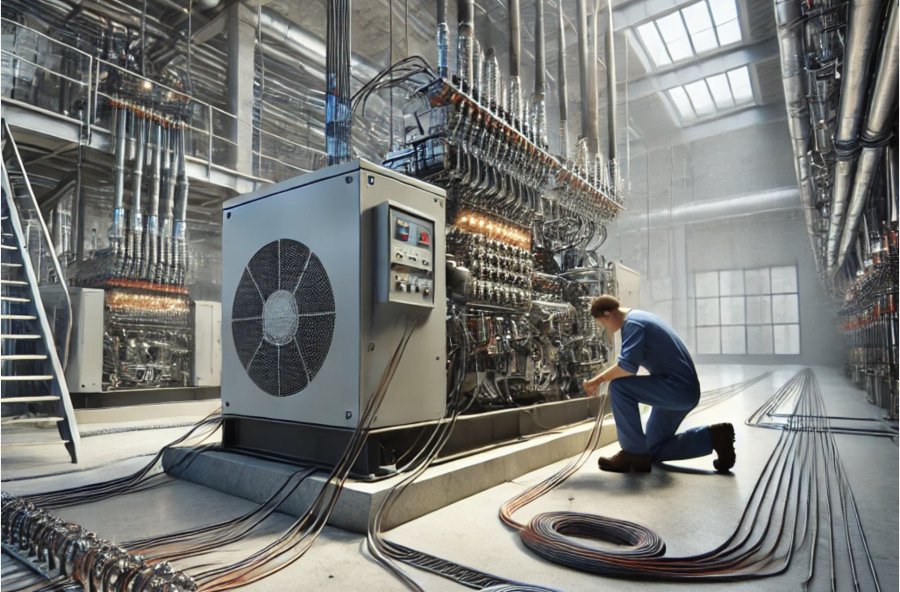
Grounding of a Generator Installation: Importance and Rules of Implementation
USING A GENERATOR WITHOUT GROUNDING IS PROHIBITED
During the operation of a generator installation, there is a need to generate high-voltage electricity, which carries the risk of electric shock. To prevent this, proper and reliable grounding of the generator must be ensured. In this article, we will discuss how to properly organize the grounding of a generator installation and which standards must be followed.
Why is grounding important?
Grounding of a generator installation serves several important functions:
- Protection from electric shock. Electrical systems with high voltage pose a threat to life and health. Grounding reduces the risk of electric shock in emergency situations.
- Reduction of static electricity. During operation, the generator creates an alternating electric field that can induce static electricity. Grounding helps dissipate this charge, ensuring the safety of the equipment.
- Stabilization of generator operation. Reliable grounding helps avoid damage to generator components, such as bearings, drive mechanisms, and other systems caused by issues in the grounding circuit.
How to properly ground a generator?
Basic steps for organizing grounding:
- Wire preparation. For grounding the generator, it is recommended to use a copper wire with a cross-section of at least 10 mm². One end of the wire is attached to the grounding bolt on the generator frame, and the other end is connected to the grounding rod.
- Choosing a grounding rod. Grounding rods made of galvanized or stainless steel can be used. The depth of the grounding depends on the number of phases, operating conditions, and technical requirements specified in the manual.
- Grounding installation. The grounding wire is connected to the generator frame and the vertical ground rod, which is driven into the ground using a jackhammer. It is important that all connections are securely fastened and ensure good contact.
Grounding requirements
All grounding work must comply with safety standards, such as the Rules for Electrical Installations (PUE), which regulate protective grounding and neutral grounding. The main requirements include:
- The generator frame must be connected to the ground.
- The grounding wire must be flexible to compensate for vibrations of the installation.
- Metal grounding rods must have specific dimensions: the rod should have a diameter of at least 16 mm.
Safety measures during grounding
- It is prohibited to operate the generator without grounding. The presence of grounding is a mandatory condition for operation.
- Use of improper grounding rods. It is forbidden to use water supply pipes, sewer pipes, or metal building frames as grounding rods, as this may lead to equipment damage or accidents.
- Caution when working with flammable substances. It is forbidden to ground the generator through pipelines that transport flammable or explosive substances.
Professional grounding inspection
Grounding installation and inspection should be performed by qualified electricians. Only specialists can correctly assess the resistance of the grounding loop using measuring devices in accordance with norms and standards.
Conclusion
Grounding a generator is a crucial step to ensure the safety of its operation. Grounding helps protect not only the equipment but also the operators from electric shock. Properly executed grounding and regular system checks are key measures that guarantee the reliable and safe operation of the generator installation.